
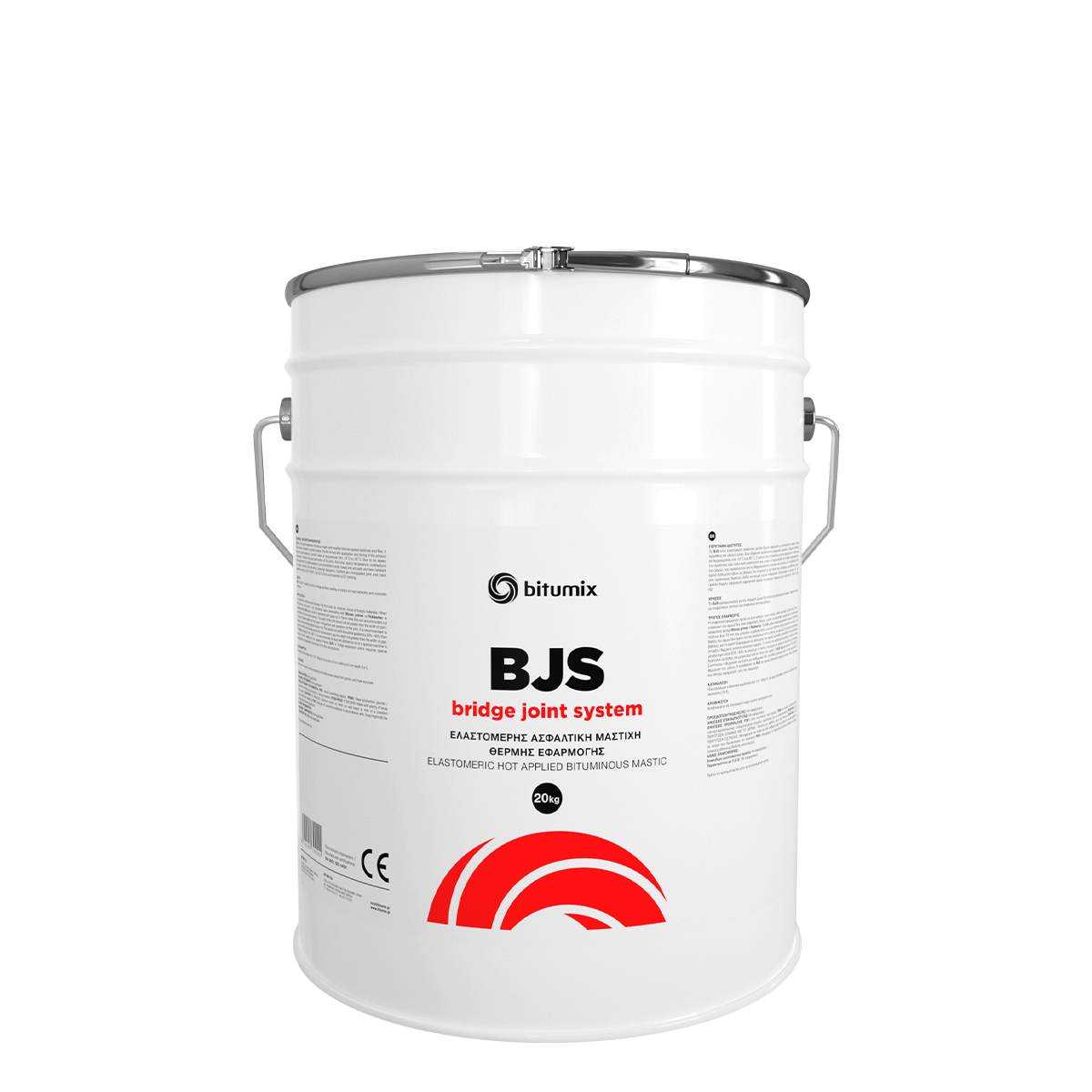

Elastomeric hot-applied bituminous mastic
BJS bridge joint system
BJS is an elastomeric bituminous, hot-applied, mastic with modified bitumen containing elastomeric additives and thin aggregates. It has a strong adhesion to asphalt and concrete surfaces. BJS remainsωelastic at temperatures from -15ºC to 80ºC. It is highly resistant to low-concentration acids and bases, unaffected by subsoil minerals and less resistant to organic solvents and oils.
Applications
The joint must be free of dust or other waste materials. BJS is heated from 140 – 180ºC. It is recommended heating in a specific device. The application of BJS on bridge joints requires special equipment and instructions by the producer.
Packaging and storage
Metallic containers, net weight 20kg. In environmentally controlled areas, for one year at least.
Technical Specifications
| Properties | Test method | Limits |
|---|---|---|
| Appearance | Observation | Solid |
| Color | Observation | Black |
| Density at 25ºC, gr/cm³ | ΕΝ 13880-1 | 1,1 - 1,3 |
| Softening point, ºC | EN 1427 | ≥85 |
| Cone penetration at 25ºC, 150gr, dmm | ΕΝ 13880-2 | 40 - 100 |
| Resilience at 25ºC, % | ΕΝ 13880-3 | ≤60 |
| Heat stability, cone penetration, dmm | ΕΝ 13880-4 | 40 - 100 |
| Heat stability, resilience, % | ΕΝ 13880-4 | ≤60 |
| Flow resistance 60ºC, 5h, mm ≤3 | ΕΝ 13880-5 | ≤3 |
| Compatibility with asphalt pavements | ΕΝ 13880-9 | No failure in adhesion |
| Bonding strength, adhesion/cohesion | ΕΝ 13880-13 | No failure |
| Cohesion | ΕΝ 13880-10 | No failure |
| Cohesion at lower temperature | ΕΝ 13880-7 | No failure |